
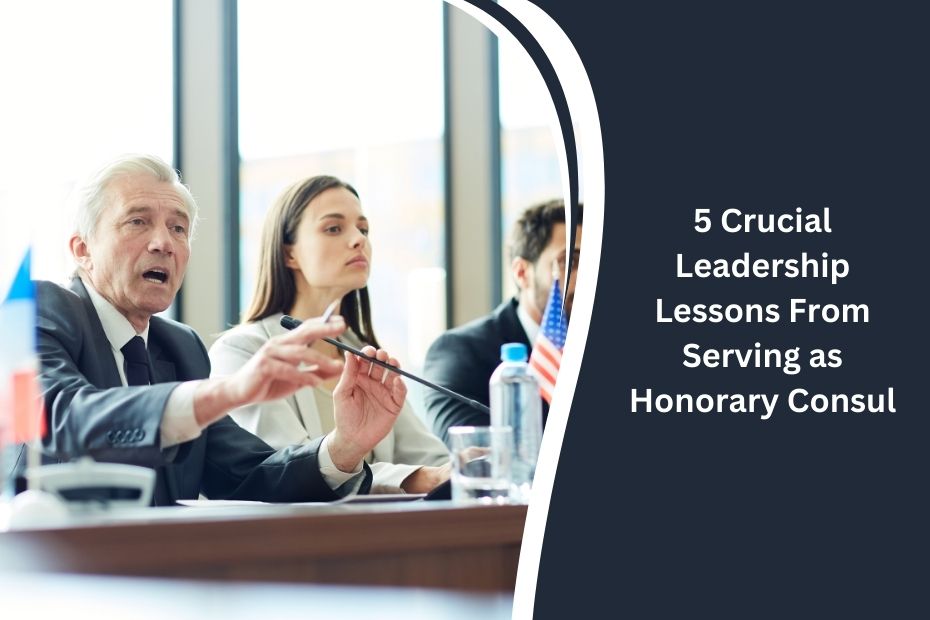
Serving as an Honorary Consul changes how you understand leadership. It’s a role that blends public representation, international diplomacy, and local problem-solving. You’re representing a country, but you’re doing it without the institutional structure of an embassy or full-time diplomatic team. That means you’re operating with autonomy, balancing diplomacy with the demands of real-life business, civic duties, and crisis response. And through that experience, you pick up leadership skills that go beyond formal titles or roles. If you’ve held this position, or you’re considering it, you’ll find that it shifts how you think, how you act, and how you lead—no matter what industry you’re in.
1. Cultural Fluency Isn’t Optional—It’s Core to Influence
You can’t represent a foreign country without learning to navigate cultural nuances in every interaction. Whether you’re meeting a minister, attending a local event, or speaking with the press, you’re constantly shifting between protocols, expectations, and assumptions. That experience trains you to lead with awareness—and to recognize that not everyone shares your frame of reference.
As an entrepreneur or executive, this translates directly into how you work across teams, markets, or clients from different backgrounds. You start listening more carefully. You notice tone, gesture, and silence. You learn when to push and when to pause. And most importantly, you understand how trust builds differently in different settings. That awareness shapes your leadership in a way no classroom or book can replicate. When you operate with cultural fluency, you lead with connection—not just direction.
2. You Learn That Influence Starts Before the Conversation
In this role, you don’t lead with authority—you lead with trust. You can’t compel anyone to act. You’re not their employer, and you don’t control budgets or enforcement. What you do have is reputation, clarity, and consistency. And that’s where influence is built. You learn to prepare before the meeting, to know what matters to the other party, and to show up with something meaningful to offer.
This teaches you to value preparation over persuasion. You walk into negotiations or stakeholder discussions not trying to win, but trying to align. That shift makes you a better strategist, a better listener, and a more effective communicator. You stop focusing on saying the right thing and start focusing on earning the right to be heard. In business, that’s a skill most leaders chase for years—and the Honorary Consul role teaches it by necessity.
3. Crisis Management Becomes Muscle Memory
Whether it’s a stranded citizen, a legal issue, or a sudden emergency, you’re the first point of contact when something goes wrong. There’s no time to escalate or delegate. You learn how to stay calm, gather facts, coordinate resources, and act. That doesn’t mean you always have the perfect solution—but it does mean you know how to move with purpose under pressure.
In business, those same instincts serve you every time something unexpected hits your inbox. You don’t panic. You prioritize. You clarify. You act. Whether it’s a client escalation, a vendor delay, or a reputational threat, you’ve practiced how to stabilize situations without freezing. This kind of poise doesn’t come from theory—it comes from repetition. And the Honorary Consul role gives you plenty of that.
4. You Realize That Ethics Aren’t About Compliance—They’re About Character
When you represent a country, your conduct reflects more than just your own values. Every decision, every meeting, every interaction carries weight. That awareness forces you to develop a stronger internal compass. You’re not just asking, “Is this allowed?” You’re asking, “Is this right?” You start thinking about long-term credibility, not short-term convenience.
This changes how you lead your business or your team. You hold yourself to a higher standard—not because someone is watching, but because you know how fast trust erodes when it’s lost. You start asking better questions in board meetings. You spot conflicts of interest sooner. And you build a culture that values transparency and ownership. Ethics stops being a policy—it becomes your personal brand.
5. You Learn That Communication Is a Bridge, Not a Weapon
As an Honorary Consul, you spend a lot of time communicating across difference. You explain your country’s policies to people who might disagree with them. You advocate for your nationals without offending local institutions. You write letters, give speeches, handle media—always balancing clarity with diplomacy. You learn how to say what needs to be said without creating unnecessary tension.
This practice sharpens your communication in all areas of leadership. You become more intentional with language. You pause before reacting. You ask more questions. Whether you’re giving feedback to an employee or making a public statement during a crisis, you focus on creating understanding—not scoring points. That makes you a leader people want to follow, not just one they have to listen to.
Key Leadership Lessons from Serving as Honorary Consul
- Cultural fluency improves how you build trust
- Influence grows through preparation, not authority
- Crisis response sharpens leadership instincts
- Ethics become a daily leadership standard
- Diplomatic communication strengthens clarity and calm
In Conclusion
Serving as an Honorary Consul forces you to grow—fast. It tests your judgment, sharpens your communication, and challenges your ability to lead without authority. And as you adapt to those demands, your leadership becomes more grounded, more thoughtful, and more effective. These lessons don’t just help you serve better in that role—they carry over into every decision you make, every relationship you build, and every team you lead. You walk away with more than a title. You walk away with a toolkit that applies anywhere leadership is needed—and that’s almost everywhere.
This article draws on lived experience in international representation and business leadership, offering practical lessons for executives navigating complexity without formal authority. For more reflections on global leadership, crisis response, and ethical decision-making, follow the author on Medium.

Olivier Gillier is a global investment strategist and co-founder of RioBlanco Capital LLC, with over 20 years of experience in wealth management and international markets. A former Senior Vice President at Merrill Lynch, he now focuses on private equity, cross-border finance, and philanthropic initiatives worldwide.